
Xavier Bresson
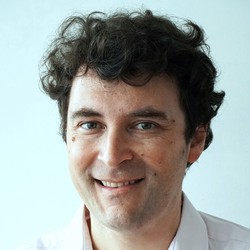
Abstract: This talk provides a personal account of the research process, centered on the growth of Graph Neural Networks. By sharing experiences from my own work, I will examine the inevitable challenges and breakthroughs that define a research career, illustrating how individual contributions help shape an emerging scientific field.
Bio: Xavier Bresson (PhD 2005, EPFL, Switzerland) is Associate Professor in Computer Science at NUS, Singapore. He is a leading researcher in the field of Graph Deep Learning, a new framework that combines graph theory and deep learning techniques to tackle complex data domains in natural language processing, computer vision, combinatorial optimization, quantum chemistry, physics, neuroscience, genetics and social networks. He has published more than 60 peer-reviewed papers in the leading journals and conference proceedings in machine learning, including articles in NeurIPS, ICML, ICLR, CVPR, JMLR, and has organized multiple international workshops and tutorials on AI and deep learning.
Milind Tambe
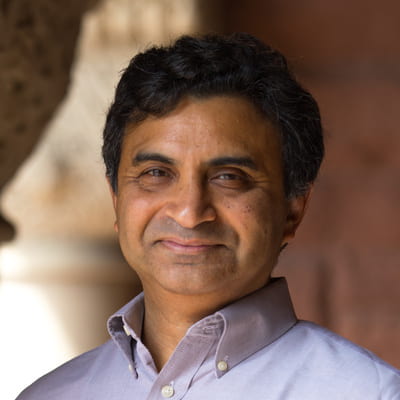
Abstract: My team’s work on AI for Social Impact (AI4SI) has spanned two decades, focusing on optimizing limited resources in critical areas like public health, conservation, and public safety. I will present field results from India, where deployed restless and collaborative bandit algorithms achieved significant improvements in the world’s two largest mobile maternal health programs. I will also present ongoing work on network-based HIV prevention in South Africa, modeled as a branching bandit problem. These projects, and other work across Africa and Asia that I will highlight, expose a critical bottleneck to AI4SI scaling—the deployment bottleneck—which spans all stages of the ML pipeline: the observational scarcity gap (data), the policy synthesis gap (learning/modeling), and the human-AI alignment gap (deployment). This talk investigates how Generative AI can accelerate the AI4SI deployment cycle, specifically through the leveraging of LLM Agents and diffusion models. LLM Agents address the alignment gap by integrating expert guidance into algorithmic planning, yielding resource optimization strategies that reflect real-world priorities. Furthermore, diffusion models address the observational scarcity and policy synthesis gaps by generating synthetic social networks, applying Transfer RL to utilize data across domains, and efficiently synthesizing complex policies. I will conclude by discussing this path toward scalable and human-aligned AI for Social Impact.
Bio: Milind Tambe is Gordon McKay Professor of Computer Science at Harvard University; concurrently, he is also Principal Scientist and Director for “AI for Social Good” at Google Research. Prof. Tambe and his team have developed innovative AI and multi-agent reasoning systems that have been successfully deployed to deliver real-world impact in public health (e.g., maternal and child health), public safety, and wildlife conservation. He is the recipient of the AAAI Award for Artificial Intelligence for the Benefit of Humanity, the AAAI Feigenbaum Prize, the IJCAI John McCarthy Award, the AAAI Robert S. Engelmore Memorial Lecture Award, the AAMAS ACM/SIGAI Autonomous Agents Research Award, and the INFORMS Wagner Prize for excellence in Operations Research practice. He is a fellow of AAAI and ACM. For his work on AI and public safety, he has also received the Military Operations Research Society Rist Prize for best implemented national security operations research study, the Columbus Fellowship Foundation Homeland security award, and commendations and certificates of appreciation from the US Coast Guard, the Federal Air Marshals Service, and airport police at the city of Los Angeles.
Peter Stone
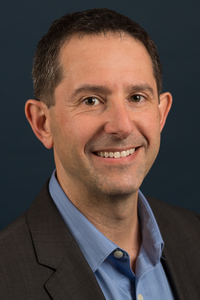
Abstract: This talk will provide information on how to plan ahead for a job search after getting your Ph.D. It will focus mainly on academic searches, but will also be relevant to industrial research labs.
Bio: Dr. Peter Stone holds the Truchard Foundation Chair in Computer Science at the University of Texas at Austin. He is Chair of the Computer Science Department, as well as Founding Director of Texas Robotics. In 2013 he was awarded the University of Texas System Regents' Outstanding Teaching Award and in 2014 he was inducted into the UT Austin Academy of Distinguished Teachers, earning him the title of University Distinguished Teaching Professor. Professor Stone's research interests in Artificial Intelligence include machine learning (especially reinforcement learning), multiagent systems, and robotics. Professor Stone received his Ph.D in Computer Science in 1998 from Carnegie Mellon University. From 1999 to 2002 he was a Senior Technical Staff Member in the Artificial Intelligence Principles Research Department at AT&T Labs - Research. He is an Alfred P. Sloan Research Fellow, Guggenheim Fellow, AAAI Fellow, IEEE Fellow, AAAS Fellow, ACM Fellow, Fulbright Scholar, and 2004 ONR Young Investigator. In 2007 he received the prestigious IJCAI Computers and Thought Award, given biannually to the top AI researcher under the age of 35, in 2016 he was awarded the ACM/SIGAI Autonomous Agents Research Award, and in 2024 he was awarded the ACM/AAAI Allen Newell Award. Professor Stone co-founded Cogitai, Inc., a startup company focused on continual learning, in 2015, and currently serves as Chief Scientist of Sony AI.